
Dimensional Optimization of Plastic Housings: The LTP Technology Toolbox


Plastic is now an integral part of everyday life, finding applications across a wide range of industries, including packaging, electronics, automotive, and fashion. One of the key reasons for its widespread adoption is its exceptional versatility, allowing it to be customized to meet virtually any design requirement or application.
Plastic components have become increasingly common in industrial and urban environments due to their lightweight properties, corrosion resistance, and generally lower cost compared with metal parts. However, manufacturing large plastic components presents significant technical and economic challenges, including complex design requirements, high mold costs, the need for large and expensive injection molding machines, as well as storage and logistics constraints.
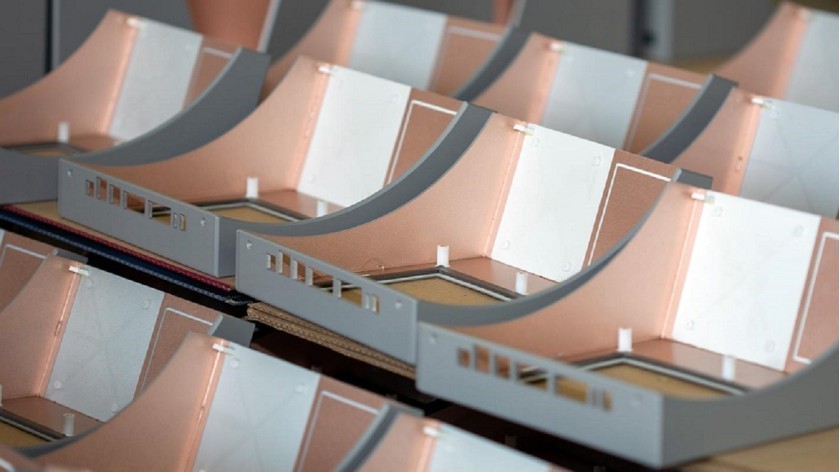
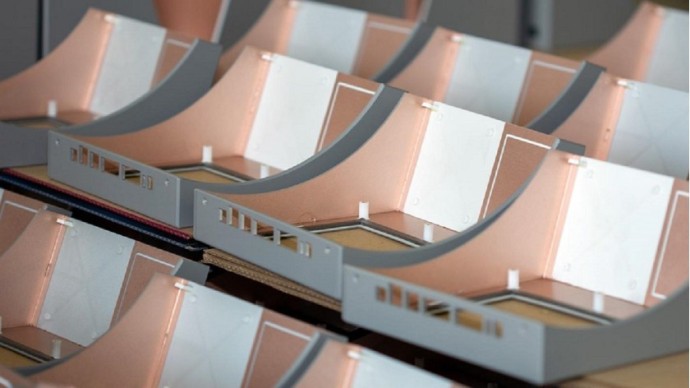
Thanks to its innovative manufacturing process, LTP offers custom-sized plastic enclosures with optimized dimensions and on-demand production for small and medium-sized production runs.
Proposed and Implemented Solutions
To address these challenges, the engineers at LTP adapt the design of plastic enclosures by optimizing several key parameters:
Impact on Design and Material Selection
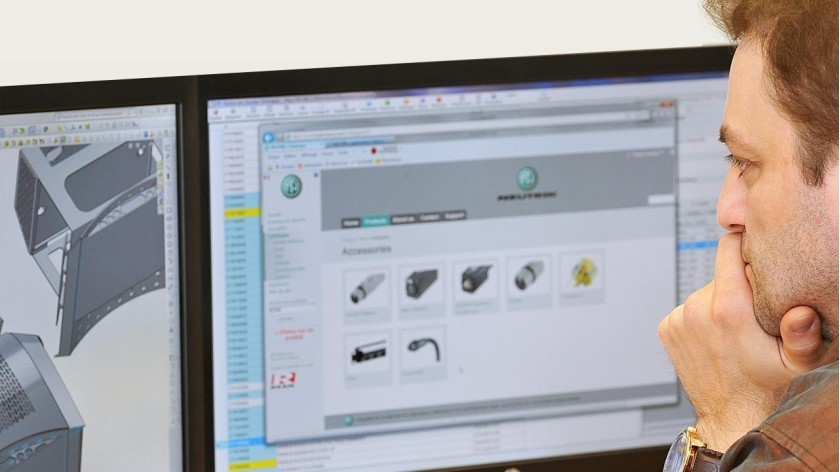
Modular design: Use of a technological design toolkit that enables flexible adaptation of the enclosure design in terms of dimensions, shape, aesthetics, and other specifications.
Structural optimization: Integration of ribs, openings, inserts, and reinforcements to optimize the structural performance of plastic enclosures while ensuring the required mechanical strength.
Dimensional optimization: Use of a wide range of materials with reduced wall thicknesses, lightweight material solutions, and customized treatments or reinforcements where necessary. This optimization provides the best balance between strength and weight.
Modular assembly: Instead of manufacturing a single large enclosure, it is sometimes preferable to design several smaller components that can be assembled on site.
Benefits in Terms of Cost, Performance, and Sustainability
Optimized mechanical performance:
Intelligent, customized design makes it possible to optimize the geometry and mechanical strength of plastic enclosures, ensuring high performance while meeting application-specific requirements.
Reduced production costs:
Modular design, dimensional optimization, and environmentally responsible manufacturing processes help reduce the production costs of plastic enclosures.
On-demand production of small and medium-sized batches:
LTP offers highly competitive pricing for the manufacture of small and medium production runs through its adaptive and modular design and manufacturing approach. Customers can order custom-made plastic enclosures according to their specific production needs.
Reduced logistics and environmental costs:
Choosing LTP's technology provides several advantages:
Supports an environmentally responsible manufacturing approach.
Reduces storage and transportation costs through modular, on-demand design and production.
Optimizes packaging volume and simplifies on-site assembly.
Lowers energy consumption and material usage through dimensional optimization, thereby contributing to improved overall energy efficiency.
A Precise and Well-Controlled Manufacturing Process
The following example illustrates the functional requirements analysis and the development and validation process for plastic enclosures designed for electronic applications at LTP:
1. Identification of Plastic Enclosure Functions:
1.1. Primary Functions (PF):
FP1: Protection – Protect electronic components against impacts, dust, moisture, and chemical exposure.
FP2: Structural Support – Provide sufficient rigidity and support to prevent excessive deformation and ensure overall stability.
FP3: Integration – Accommodate the dimensions of the electronic components and ensure compatibility with the interfaces of the installation environment.
1.2. Constraint Functions (CF):
CF1: Mechanical Strength – Withstand specified static and dynamic loads without failure.
CF2: Thermal Resistance – Operate reliably over the required temperature range according to the electronic components and the installation environment.
CF3: Dimensional Optimization – Optimize the enclosure dimensions and geometry while maintaining the required strength and structural integrity.
CF4: Manufacturability – Be suitable for fabrication using LTP's plastic sheet fabrication process while achieving optimal production costs.
CF5: EAesthetics and Ergonomics – Feature a design that is both user-friendly and compliant with the customer's aesthetic and functional requirements.
2. Requirements and Performance Criteria:
Function | Requirements | Validation Criteria |
FP1 | Compliant with the customer's specifications | LTP Technical Expert |
FP2 | Compliant with the customer's specifications | Prototype Validation |
FP3 | Compliant with the customer's specifications | LTP Technical Expert |
CF1 | Compliant with the customer's specifications | Mechanical Strength Testing |
CF2 | Compliant with the customer's specifications | Thermal Resistance Testing |
CF3 | Dimensional Optimization | LTP Technical Expert |
CF4 | Suitable for plastic sheet fabrication | LTP Technical Expert |
CF5 | Compliant with the customer's requirements | Design Validation |
3. Next Steps:
Once the functional requirements have been clearly defined, the next steps include :
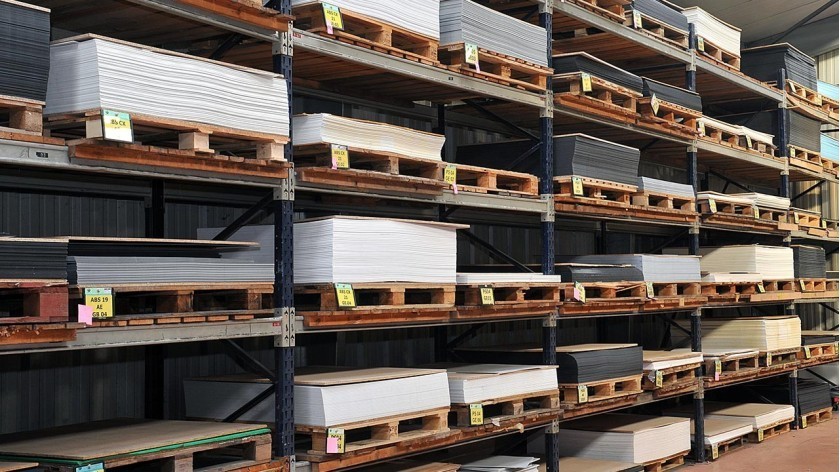
3.1. Material Selection: Select the most suitable plastic material (PMMA, PVC, PS, PC, ABS, etc.) according to the application requirements.
3.2. CAD Design: Develop the CAD model, carry out the enclosure design, and perform dimensional optimization.
3.3. Prototyping and Validation: RManufacture a prototype using LTP's plastic sheet fabrication process to evaluate and validate the enclosure's performance.
3.4. Production Launch: Validate the manufacturing process and initiate on-demand production in small or medium-sized batches.
By partnering with LTP, you benefit from an optimized design approach, rigorous material selection, and innovative manufacturing processes, ensuring effective management of technical challenges and enhanced performance of your plastic enclosures.
Contact an LTP Plastic Sheet Fabrication Expert!
Read other articles

Recycling 95% of Plastic: For the past 15 years, our production site has implemented responsible waste management practices, with particular attention paid...

Manufacturing Cost Optimization for Custom Plastic Enclosures
No More Molding — Welcome to Plastic Sheet Fabrication Companies are looking for solutions to reduce their expenses without compromising the quality of their...

LTP, the Specialist in Custom Plastic Enclosures for Electronics
The electronics industry is evolving at an unprecedented pace, driven by continuous innovations in components, connectivity, and energy efficiency. This...
: LTP")
Corporate Social Responsibility (CSR): LTP
LTP Technology Offers Tailor-Made Solutions for Your Projects Corporate Social Responsibility (CSR) is relevant across all industries, as it aims to...

Designing a Custom Plastic Enclosure with the Best Material
Finding the Right Balance Between Cost, Durability, and Aesthetics When designing a custom plastic enclosure, material selection is a critical step. By...